What Happens to Old Credit Card After Balance Transfer and What to Do
A balance transfer usually leaves your old card open. Learn what to check, how it may affect credit, and when keeping or closing it may make sense.
A credit card balance transfer moves debt from one card account to another. It changes where the balance is owed, but it does not by itself close the original account.
After you request the transfer, the safest approach is to treat both cards as active until the payment has posted correctly. You can then decide what to do with the old credit card. For U.S. consumers, this personal finance choice should fit the budget, card expenses, and other debt goals.
What happens to the old credit card after the transfer?
The old card usually remains open and keeps the same account number, limit, annual fee, rewards rules, and other terms. Only the debt moves.
Chase states that the original account will remain open unless you choose to close it. The card issuer may still close or change an account under its agreement. This may happen after a long period with no use. The transfer request itself does not ask the issuer to cancel the card.
The transferred amount leaves the old balance
When the new issuer sends the transfer, it acts much like a payment to the old card. If you transfer the full eligible balance and no other charges post, the old card may show $0.
A partial transfer reduces the old balance without clearing it. Chase also confirms that any untransferred amount remains on the original card. That debt continues under the old account’s interest rate and payment terms.
The physical card still works if the account is open
The piece of plastic does not change because the balance moved. If the account remains open, has available credit, and is in good standing, you can usually use it for new purchases.
Using it is a separate choice. New spending can rebuild credit card debt on the old account while you pay the new one. You would then have two payments and two interest calculations.
What should you do while the balance transfer is pending?
Do not stop paying the old card when you submit the request. A balance transfer can take time to process, and a due date may arrive before the money reaches the old issuer.
Keep making at least the required payment
Follow the old statement until that issuer shows the transfer as a posted payment. Paying at least the required minimum by the due date helps you avoid a late payment while the transfer is in transit.

Do not rely only on a confirmation from the new card. One account may show the transfer before the other because the issuers record different parts of the transaction at different times.
Confirm the amount on both accounts
Compare the debit or transferred balance on the new card with the payment credited to the old one. The amounts should match the approved transfer, apart from any transfer fee added under the new card’s terms.
Check these four details:
- The transfer shows as completed on the new card.
- The expected payment has posted to the old card.
- The remaining old balance matches your records.
- Automatic payments on both cards are set to the amounts you intend.
Read the next old-card statement
A $0 balance today does not guarantee that the next statement will also be $0. Pending purchases, subscriptions, account fees, or interest calculated through the payment date may post later.
Review at least the next statement before you close the old account or cancel its automatic payment. If a small balance appears, pay it by the listed due date and check again for a final zero balance.
Why might the old card still show a balance?
A remaining balance does not always mean the transfer failed. Start by comparing the amount you requested with the amount the new issuer approved and sent.
The new limit did not cover the full request
The new card’s available line may be smaller than the debt you wanted to move. The issuer may also limit how much of the credit line can be used for transfers.
In that case, the transferred portion appears on the new card and the rest stays on the old card. You must keep making payments to both accounts.
New charges posted after the transfer amount was set
A transfer covers a stated dollar amount, not every future transaction on the account. A purchase, subscription, cash advance, fee, or adjustment that posts later stays with the old card.
Move recurring charges before closing the account. Then review recent transactions so you do not mistake a valid late-posting charge for a transfer error.
Interest accrued before the payment posted
Credit card interest can continue to accrue until a payment reaches the issuer. This can leave a small later charge even when the transfer matched the balance shown when you made the request.
The old statement and cardholder agreement control the amount due. Contact the card issuer if the balance does not match your records or you cannot identify a charge.
Should you keep or close the old credit card?
Keep the old card when its low cost and useful limit outweigh the work of managing it. Close it when the fee, spending risk, or account burden matters more.
| Choice | When it may fit | Main tradeoff |
|---|---|---|
| Keep it open | The card has no annual fee, adds useful available credit, or has benefits you still use. | You must monitor another account and resist adding debt. |
| Lock it and keep it | You want to preserve the account while reducing the chance of casual spending. | Fees and recurring charges can still post, depending on the issuer. |
| Ask for a product change | The annual fee is the main problem and the issuer offers a lower-cost card. | Rewards and benefits may change, so confirm the terms first. |
| Close it | The fee outweighs the benefits, the account creates a spending risk, or simplifying matters more to you. | Available credit may fall, and rewards may need attention before closure. |
Reasons to keep it open
An open card can preserve its credit limit as part of your total available revolving credit. It may also keep useful purchase cover or rewards under the account terms.
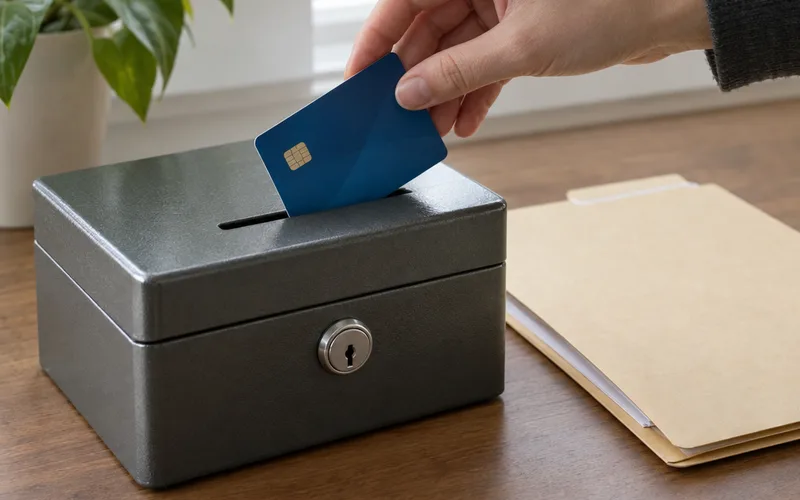
Keeping the card is most practical when it has no annual fee and you can monitor it without using it to carry new debt. The CFPB tells people who keep an unused card to check each statement. This can reveal surprise fees, charges, or identity theft.
Reasons to close it
Closing may be reasonable when the card charges an annual fee you cannot avoid or when access to another credit line makes overspending more likely. It can also reduce the number of accounts, passwords, statements, and due dates you must manage.
Payoff discipline matters more than keeping an account for its own sake. If an open card is likely to create new debt, its available credit may not be worth that risk.
How could closing the old card affect your credit score?
Closing the old card can cut your total credit and raise utilization, while FICO may still count its account age after closure. The result depends on the rest of your credit report and the scoring model. Lenders may weigh your credit score when they price loans.
Closing can raise your credit utilization ratio
Your credit utilization ratio compares card debt with your total revolving limits. The CFPB says closing a card can raise utilization and lower a score.
Consider a hypothetical example. Suppose your two cards have combined limits of $10,000 and a combined reported balance of $2,000. That is 20% utilization. Close the $4,000 card, and the total limit falls to $6,000. The $2,000 balance now equals about 33%.
This example shows the direction of the calculation, not a promised score change. Credit scores weigh more than one factor, and different models may use account data differently.
Closing does not instantly erase account age from FICO Scores
People sometimes assume an old card stops contributing to credit history the moment it is closed. FICO says its scores generally age open and closed accounts while they remain on the credit report.
This matters when you weigh a quick rise in utilization against the account’s long credit history. It also explains why closing a card solely to improve a score can have an unexpected result.
How can you keep the old card without rebuilding debt?
Make the card harder to use
If you keep the account, make spending less convenient. Remove the card from digital wallets, store it away from your everyday wallet, and use an issuer lock if you understand what that control blocks.
Keep watch for new charges
Turn on purchase and statement alerts because a lock may not stop fees or recurring charges. An automatic minimum payment can help if a small charge appears, but it does not replace statement review and needs a funded bank account.
How do you close the old card correctly?
Check the account before calling
Wait until the transfer is confirmed and you understand every remaining charge. Then review the account agreement or contact the issuer for its exact closure process.
Complete the closure checklist
- Redeem or move rewards if the program allows it.
- Move subscriptions and card payments to another card.
- Pay the remaining balance and pending charges.
- Save the final statements and note any benefits that end with closure.
- Ask the issuer to close the account and request confirmation.
- Later, check the statements and credit reports for errors.
Closing an account with debt does not cancel the debt. The CFPB says you must repay the balance on schedule after the account is closed. The issuer may keep charging interest on the debt.
What if the transfer looks wrong?
Ask the new issuer about the transfer
Contact the new issuer if the approved sum differs from your request. Also call if the transfer shows failed, reversed, or pending past the issuer’s stated time.
Ask the old issuer about the payment
Contact the old issuer if the expected payment is missing or the remaining balance is unclear.
Keep proof and protect the due date
Keep confirmation numbers, dates, statements, and screenshots of the account entries. Continue required payments while the issuers investigate so a processing problem does not turn into a late payment.
Read the new card’s terms
The promotional annual percentage rate and transfer fee belong to the new card’s terms. Read the rate, fee, grace period, deadline, and payment conditions in the cardholder agreement instead of assuming every balance transfer offer works the same way.
Frequently asked questions
Can you still use your old credit card after a balance transfer?
Usually, yes. A balance transfer normally moves debt without closing the old account. Wait until the transfer is complete, check the available credit, and avoid new spending if it would make your payoff plan harder to follow.
What happens to my old credit card after a balance transfer?
The old account generally stays open. Its balance falls by the amount transferred, but an untransferred balance, pending purchase, fee, or later interest charge can remain. Review both accounts before changing payments or closing the card.
What is the downside of a balance transfer credit card?
Possible downsides include a transfer fee, a limited promotional APR period, a new credit application, and the risk of adding purchases while repaying the transferred debt. The right choice depends on the card terms and your payoff plan.
What is the 7 year rule for credit cards?
There is no single seven-year rule that decides what happens to a card after a balance transfer. Account status and credit-report treatment are separate issues. FICO says its scores generally consider the age of both open and closed accounts while those accounts remain on the credit report.
Final thoughts
Treat the transfer as complete only after both issuers show the expected amounts. Then base the keep-or-close choice on fees, spending control, rewards, available credit, and the specific terms of the old account.